AI Products
Glenn
Glenn is seven small apps for the records a household has to keep. You say it or photograph it. Glenn writes it down where you can find it again.
Storage boxes, a driving log, receipts and warranties, a paper archive, a service log, a wine cellar and notes. Each is its own app with one job. All seven share one Flutter codebase, one backend, one account and one design system. I designed it for older people, so capture is by voice or camera and the interface is large, plain and calm. Glenn is live on the web in five languages. The App Store submission is being prepared.
Visit Glenn- Year
- 2026–present
- Role
- Creator
- Stack
- Flutter · iOS, Android, web
- Stage
- Live on web · App Store next
- 7
- apps on one codebase, one backend and one account
- 5
- languages: Swedish, Norwegian, Danish, German and English
- Live
- on the web today, with the App Store submission in preparation
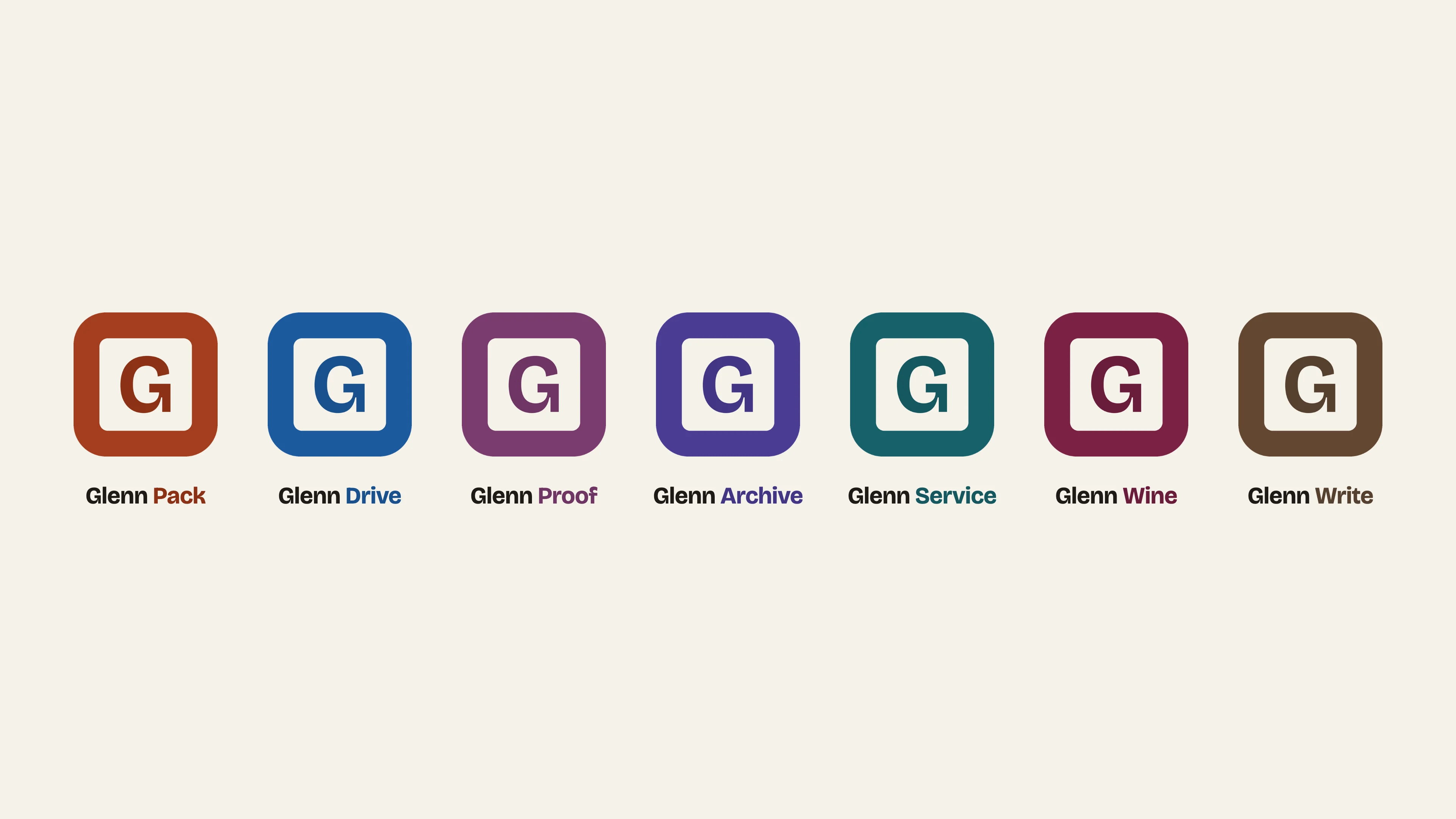
One pipeline, pointed at seven kinds of record.
Glenn started as a storage inventory. Put things in boxes, say what is inside and find any item later with one search. It is inspired by my father, who always knows which box a thing is in. Glenn is for everyone else. When I took the word storage out of it, what was left was general: capture by voice or camera, extract to structured fields, keep a record you can find. Then bring the dates back when they matter: a warranty running out, a service that is due, a wine at its best. So one app became seven. I kept them separate on purpose. Each opens on one action, so someone who only wants a driving log never meets a wine cellar. Behind them the backend is one product with seven faces.
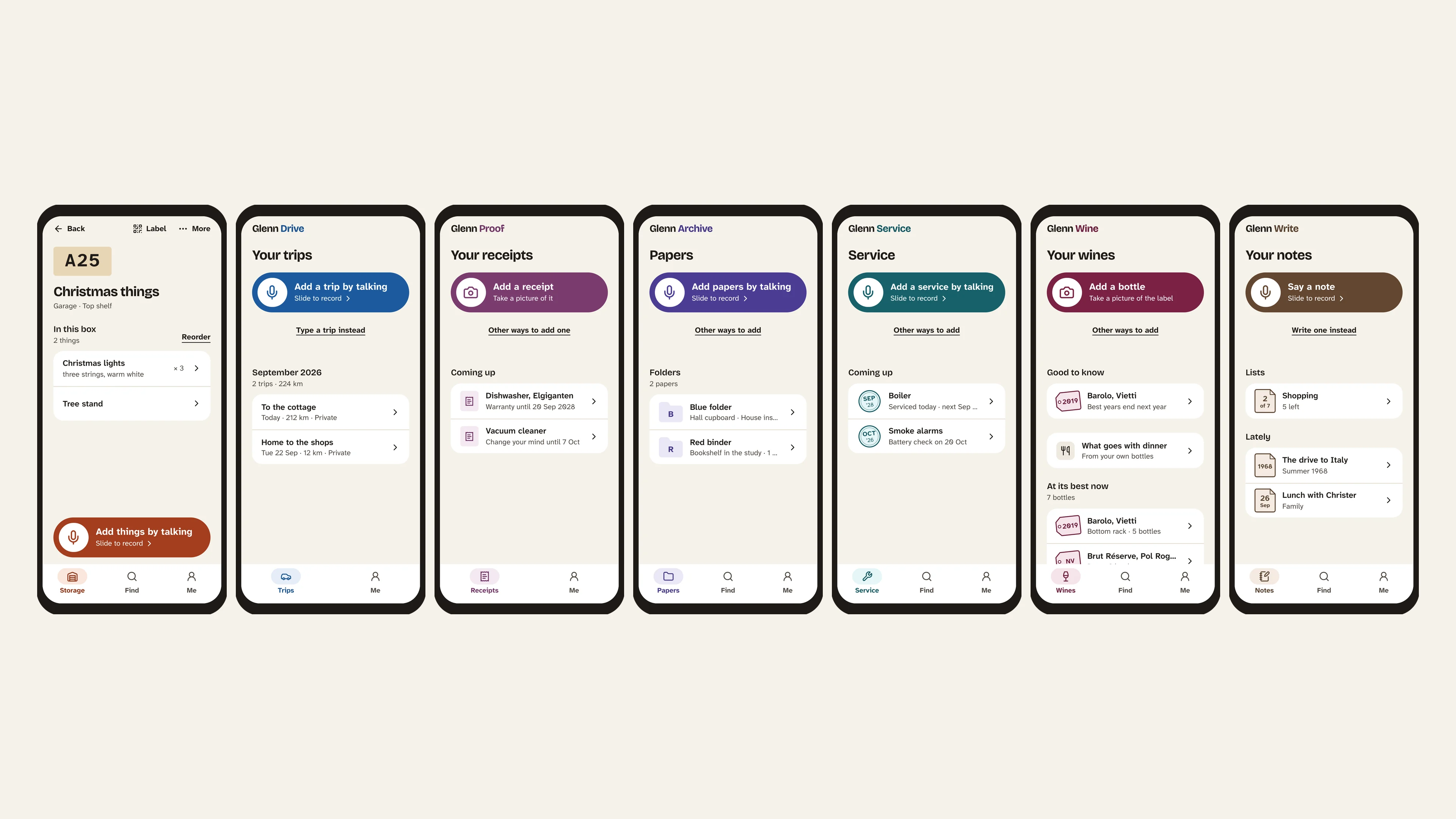
Sized for older eyes. Structured by space, not cards.
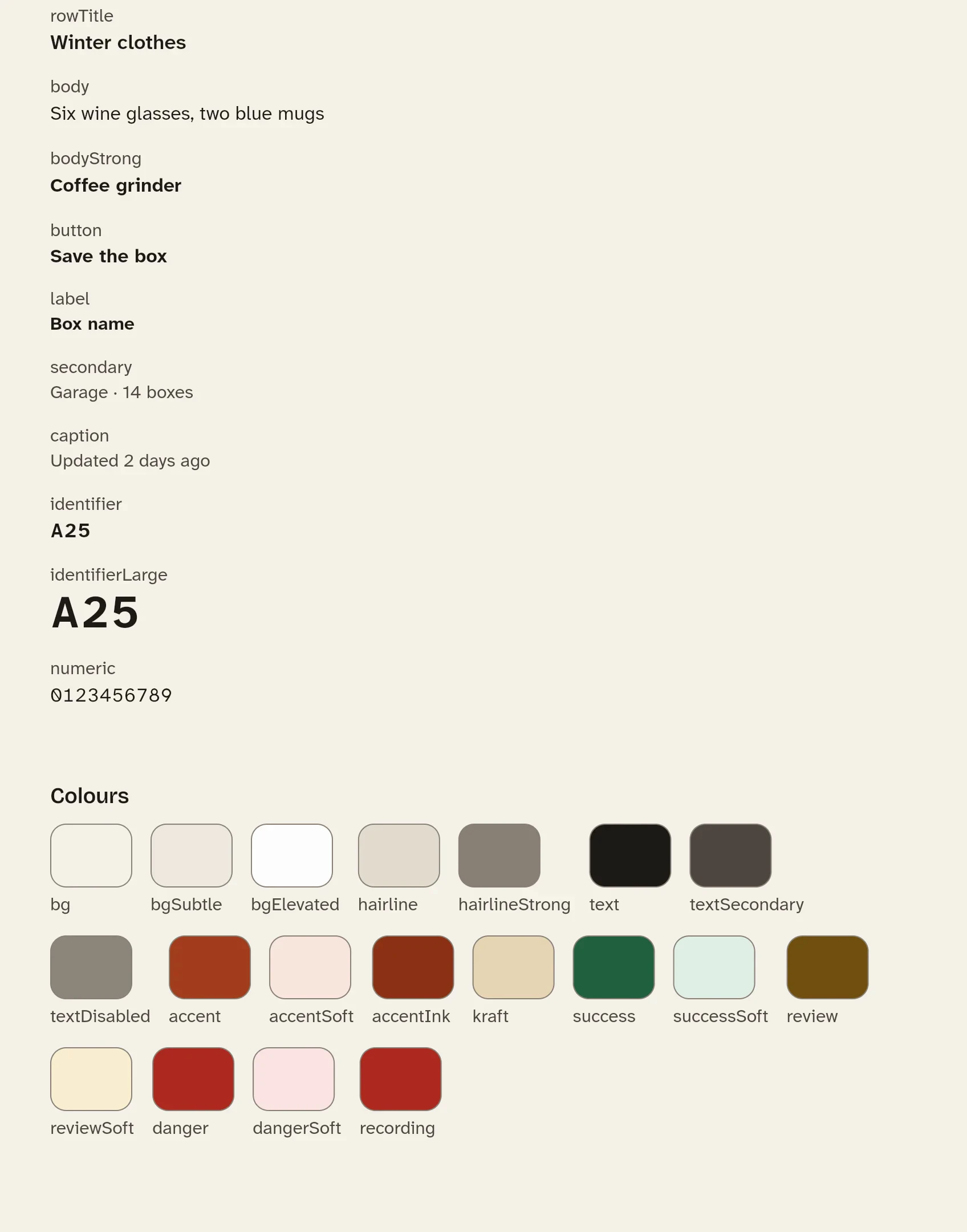
Everything visual comes from one token file and 28 primitives. Feature code may not use a raw colour, a raw font size or a stock Material widget. Body text is set at 17 and nothing goes below 16. Every control is 56 high, rows are at least 72 and the voice button is 88. My first pass was larger, with text from 19 and controls at 64. I pulled it back because too big started to read as cheap.
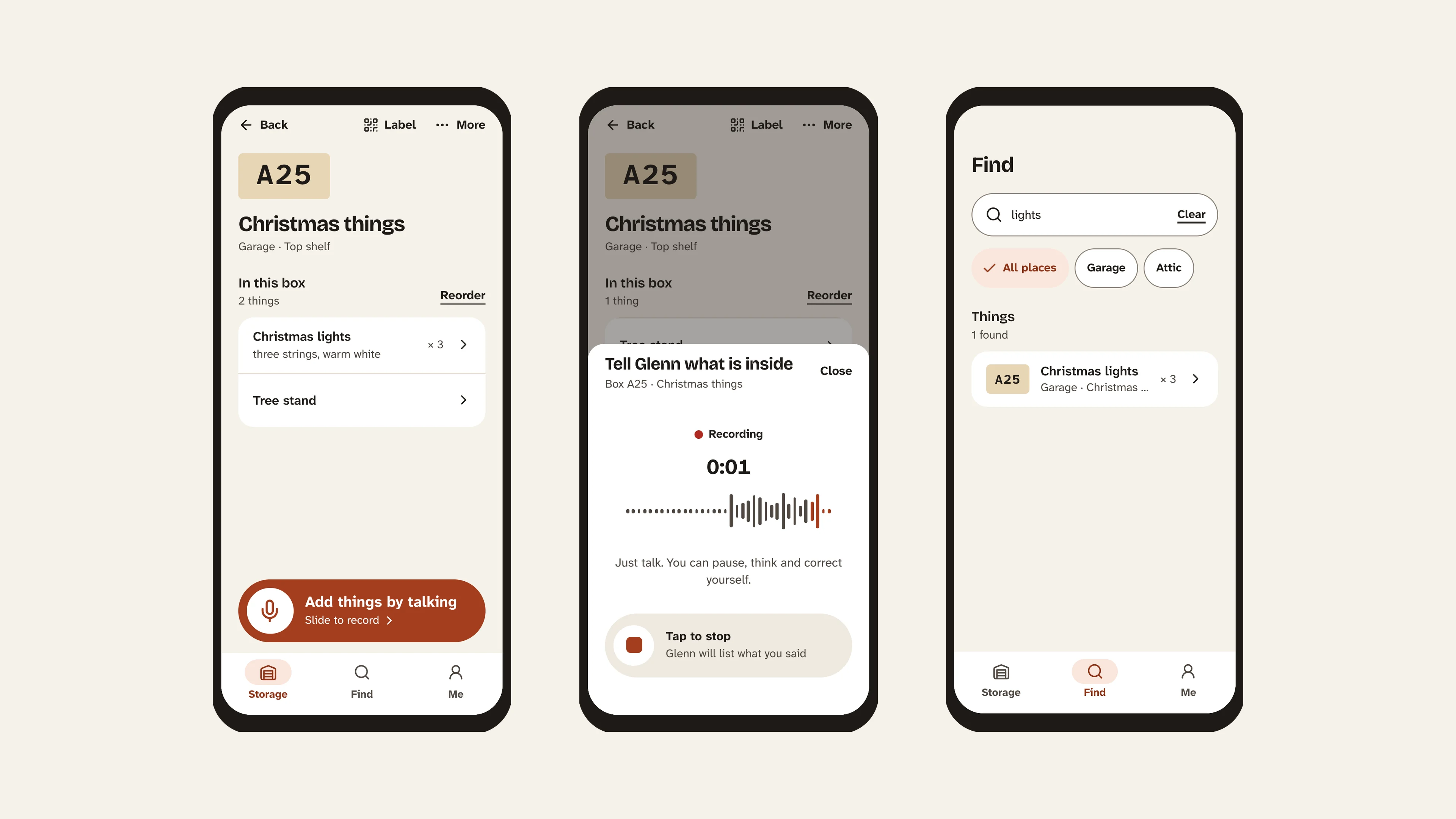
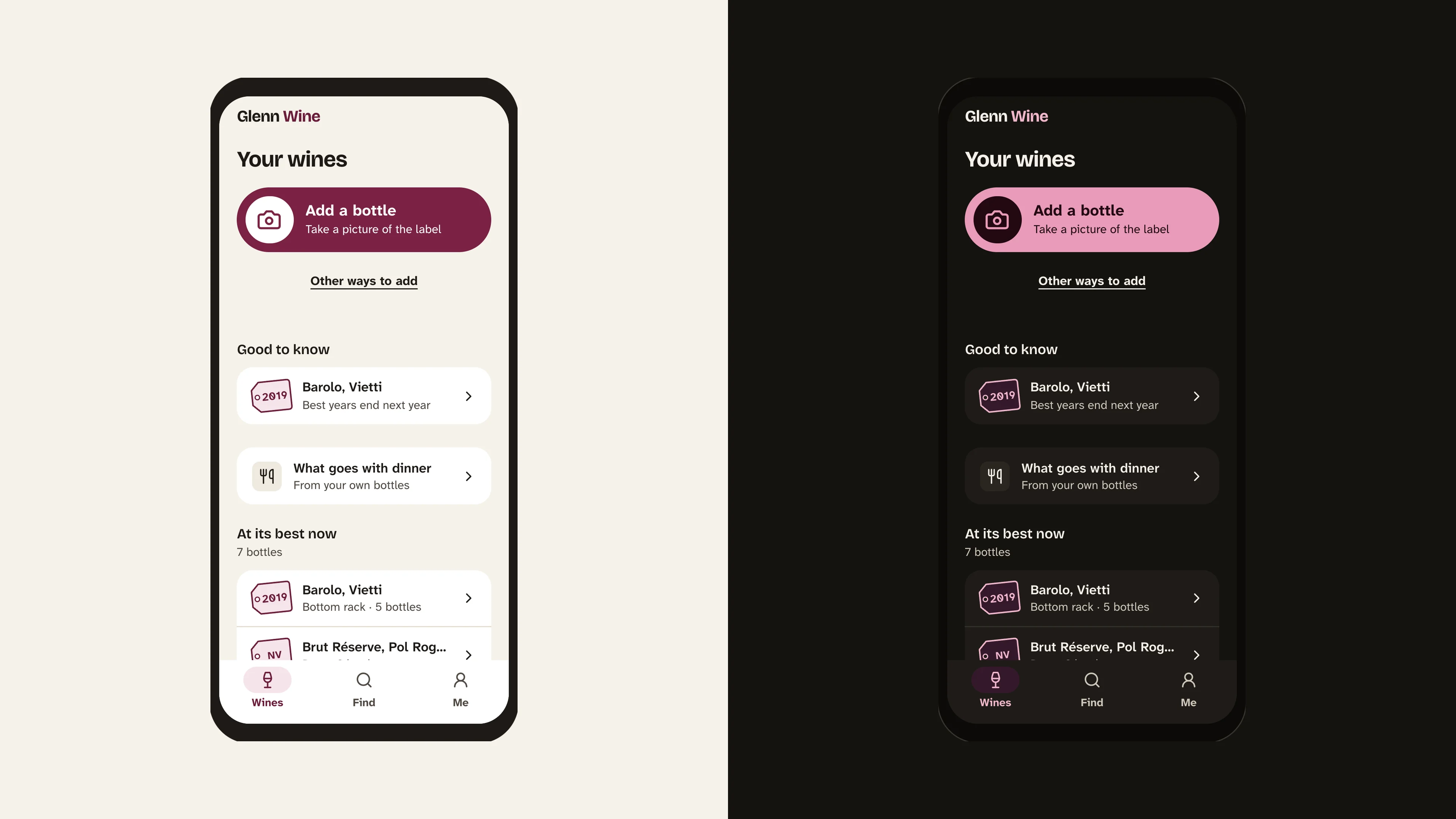
Structure comes from space and the type scale. Each list is one white block on warm paper, with no cards inside cards, no shadows and no gradients. All seven apps share this. Only the accent colour changes between them: terracotta for Pack, road-sign blue for Drive, claret for Wine. An accent is never allowed to look like a status colour.
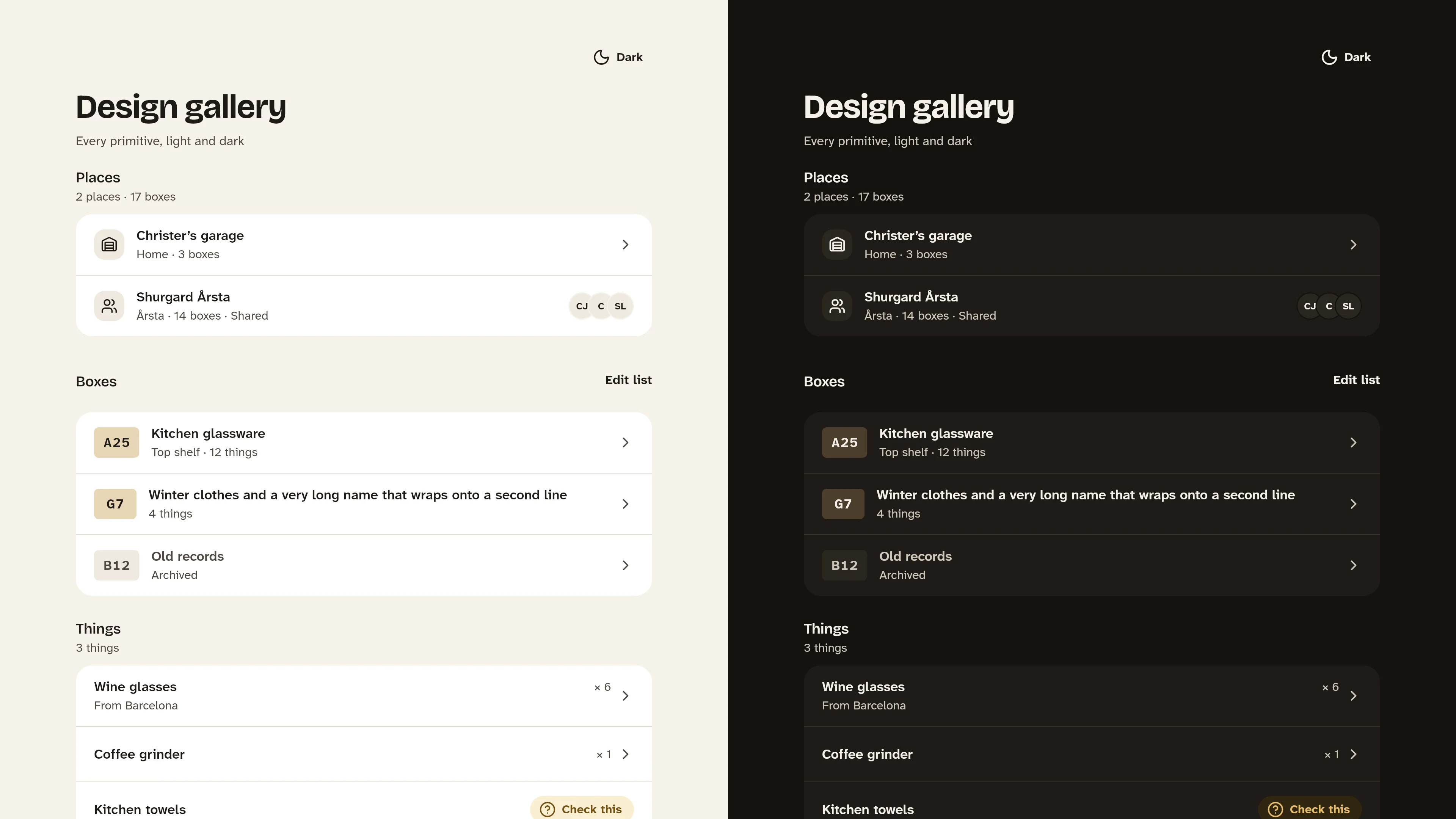
The rules that kept breaking became tests.
I wrote the rules down first. The ones that kept breaking I turned into tests. Nothing tappable may wrap onto a second line, so a test reads every row in the codebase and fails if its words would not fit a 390 wide phone, in all five languages. Apart from the minus and plus beside a quantity, no control is an icon alone. Status is never shown by colour alone. Each screen has one primary action. On a box that action is the voice button. A dev gallery renders every primitive in light and dark, so a change to a token can be seen once before it reaches seven apps.
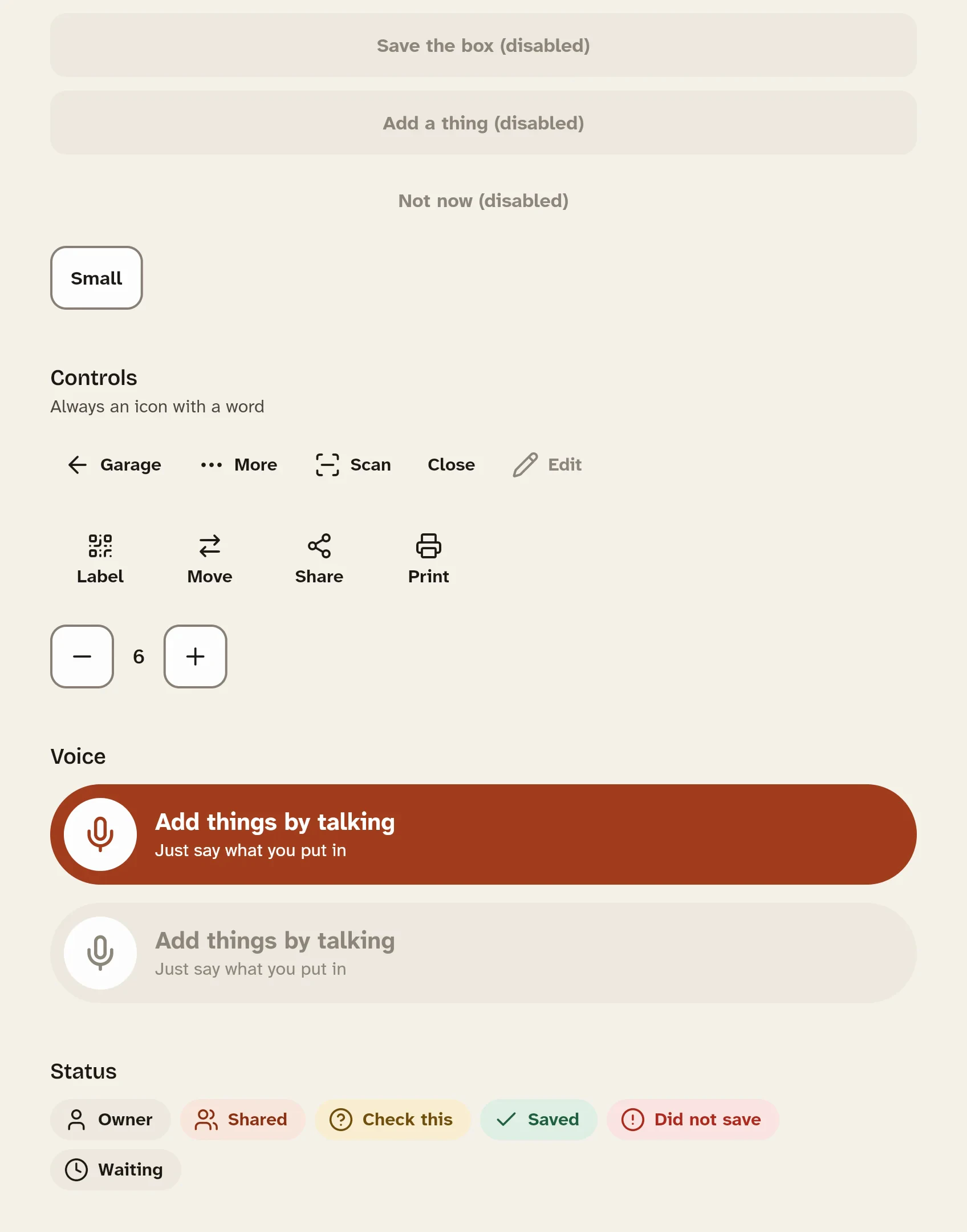
The model reads. Rules decide.
The model has a narrow job: turn what was said or photographed into fields. Nothing is sent to it before the person has said yes. The raw transcript is never kept. What happens after extraction is rules I wrote. In Wine the model picks a style and Glenn’s own table sets the drinking window. A window nobody stated is shown as Glenn’s guess. Reminders say when a wine is at its best. They never say it is time to open one.
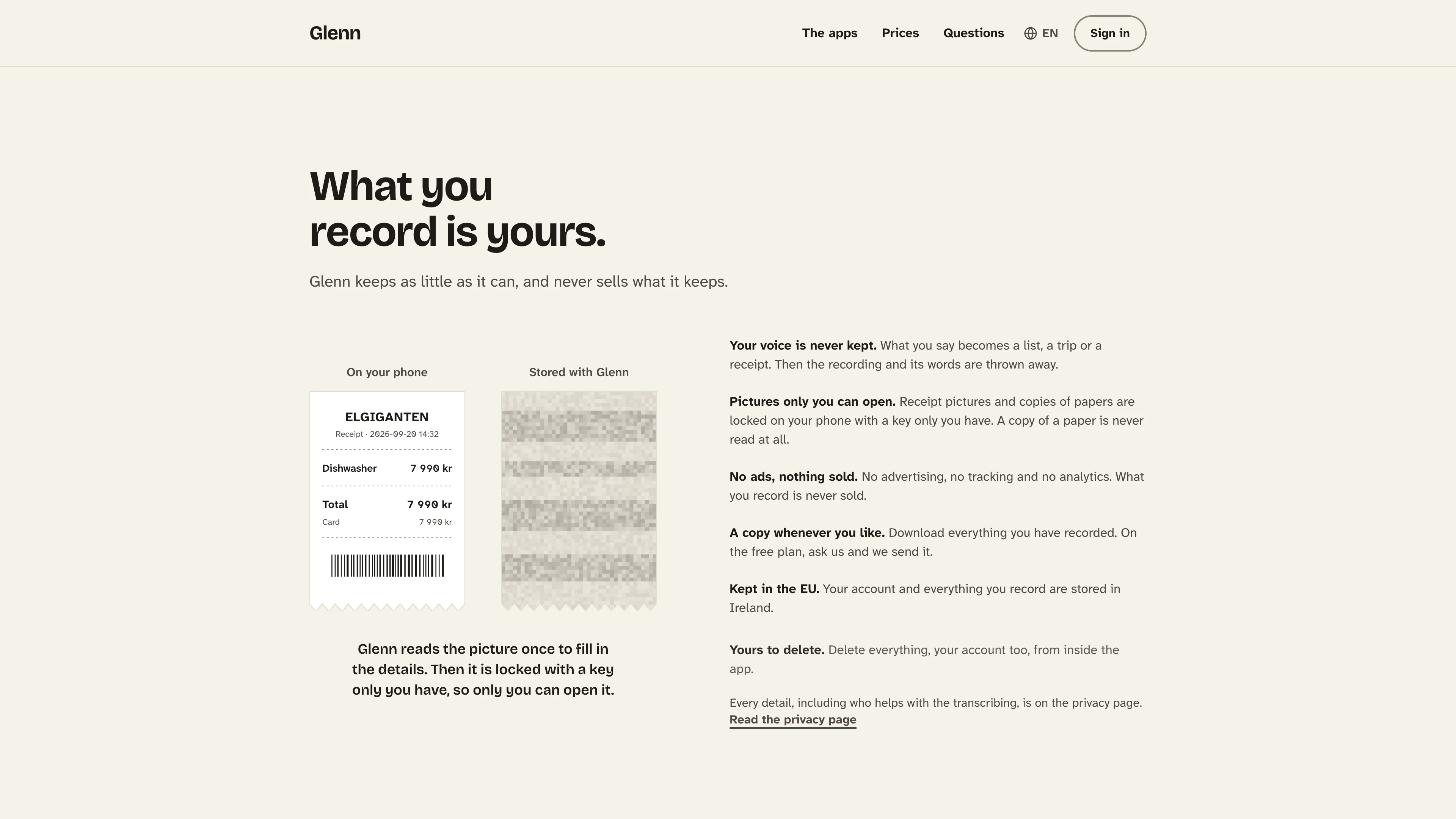
Kept pictures of receipts and papers are sealed on the device, as is every note. The server stores them and cannot read them. Country and language are separate settings, because consumer rights and mileage rates follow the country, not the language.
Stage: live on the web at itsglenn.app, all seven apps. Glenn is not in the App Store yet. A first iOS build is uploaded for testing and the submission is being prepared. It is new, so there are no user numbers to report.
Creator. I designed the system and built the apps through an AI coding agent, the way I built Heywire and Kvitta. I set the rules, break the work into small pieces and check each one.
Next
Kvitta