AI Products
Orca
Orca replaces the rented tools a firm barely uses with software it owns, fitted to how it works. It is a business idea I designed and built end to end.
It is for firms of 20 to 300 people that bill for their time: architects, engineers, agencies, consultancies. Orca maps how the firm works, builds its own system from a reusable core and then runs it. The first product is Orca Work, which covers projects, time, the invoicing basis and a client portal. Around it sit Clients, Desk, Flow and HR. The public site is live. The product runs today on demo firms with invented data.
Visit Orca- Year
- 2026–present
- Role
- Creator
- Type
- Owned software · firms that bill time
- Stage
- Site live · product on demo data
- 1
- token file is the source for the site and the product
- 12
- column grid, checked by an audit on every build
- Live
- public site at getorca.tech, with the product running on demo data
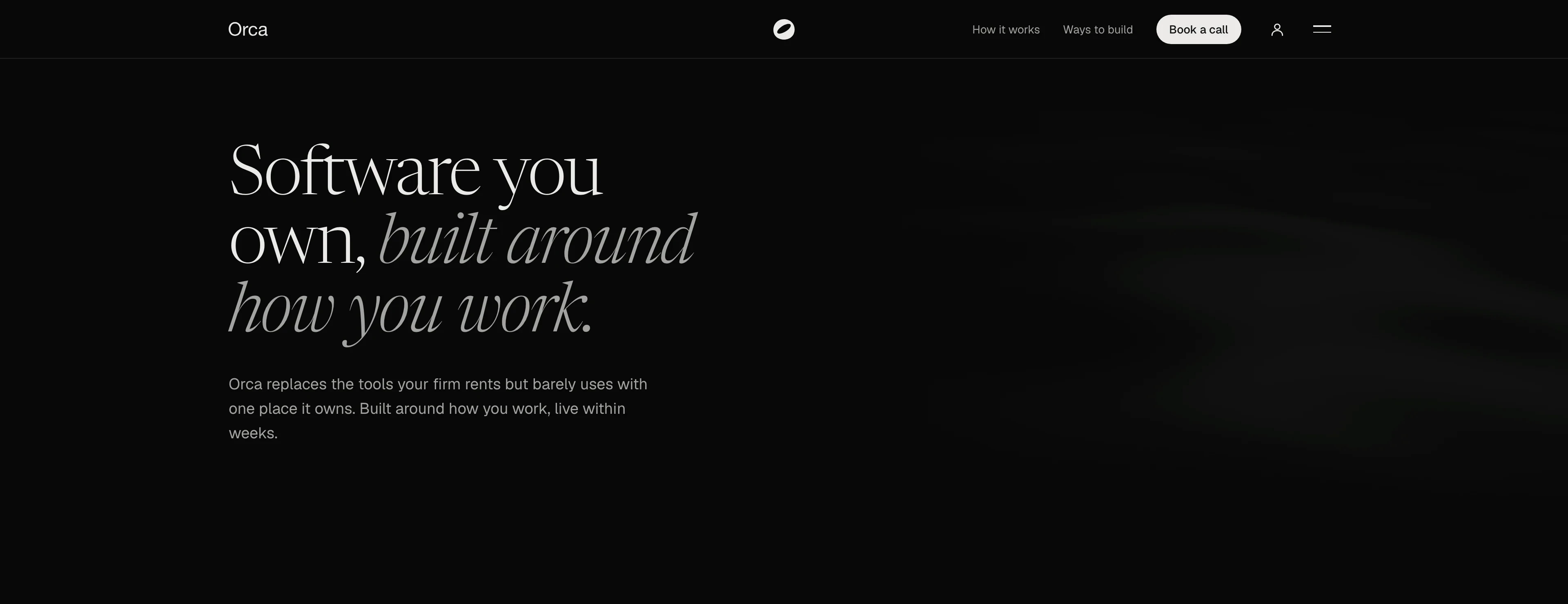
Map the firm, build its system, run it.
Orca has three parts. Atlas is Orca’s own operating system. It maps what a firm’s current tools do and how the firm works, then writes that down as a Blueprint. Forge is a reusable core with a gated build pipeline, which turns the Blueprint into the firm’s own system. Care runs it afterwards on a retainer. The product comes in two series. Base is proven modules fitted to the firm. Bespoke is Base plus pieces made only for that firm. I named them as pieces on purpose, so neither reads as the cheap tier.
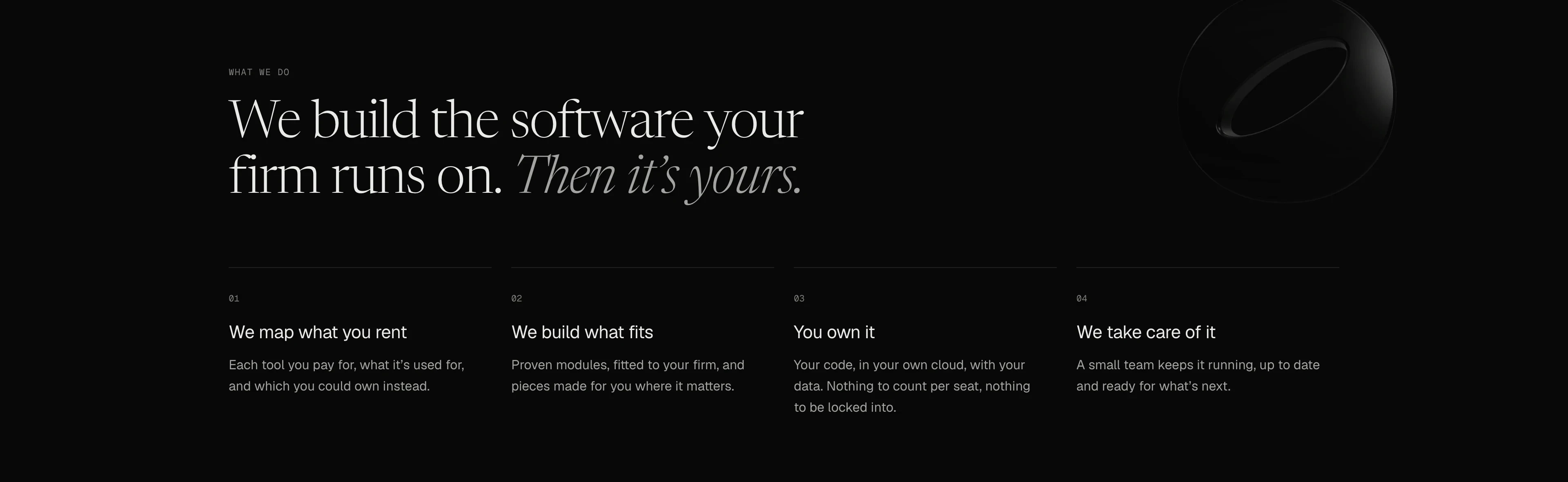
One frame, with the work in windows.
Orca Work covers projects, time, the invoicing basis and a client portal. Clients, Desk, Flow and HR are modules on the same core. The product is one frame: a rail, a header and the work in windows, with a second window beside the first. Each firm gets its own database. Every model call goes through one gateway that meters it in credits under a spend cap, so what the AI in a firm’s system costs is a number someone can read.
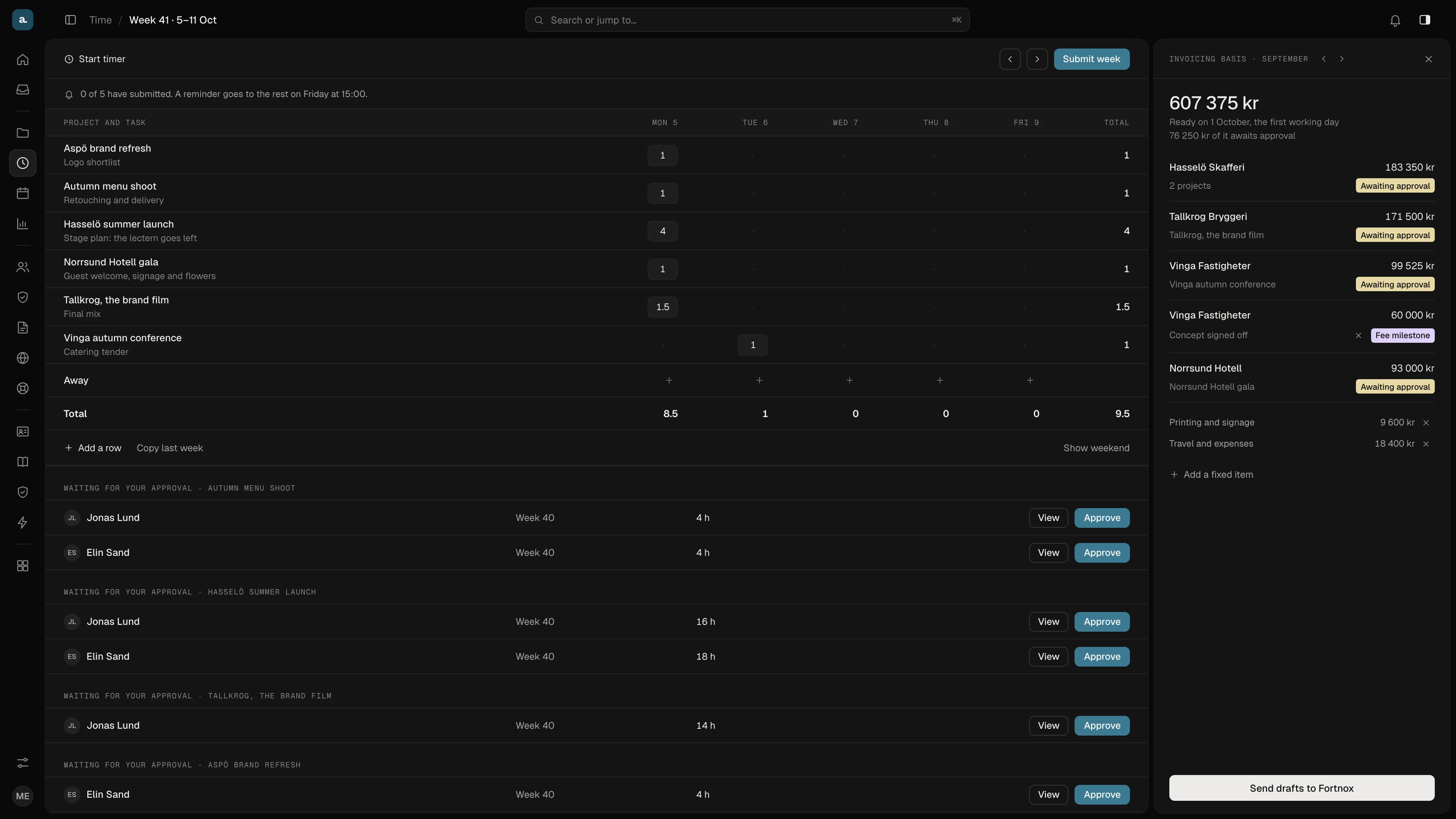
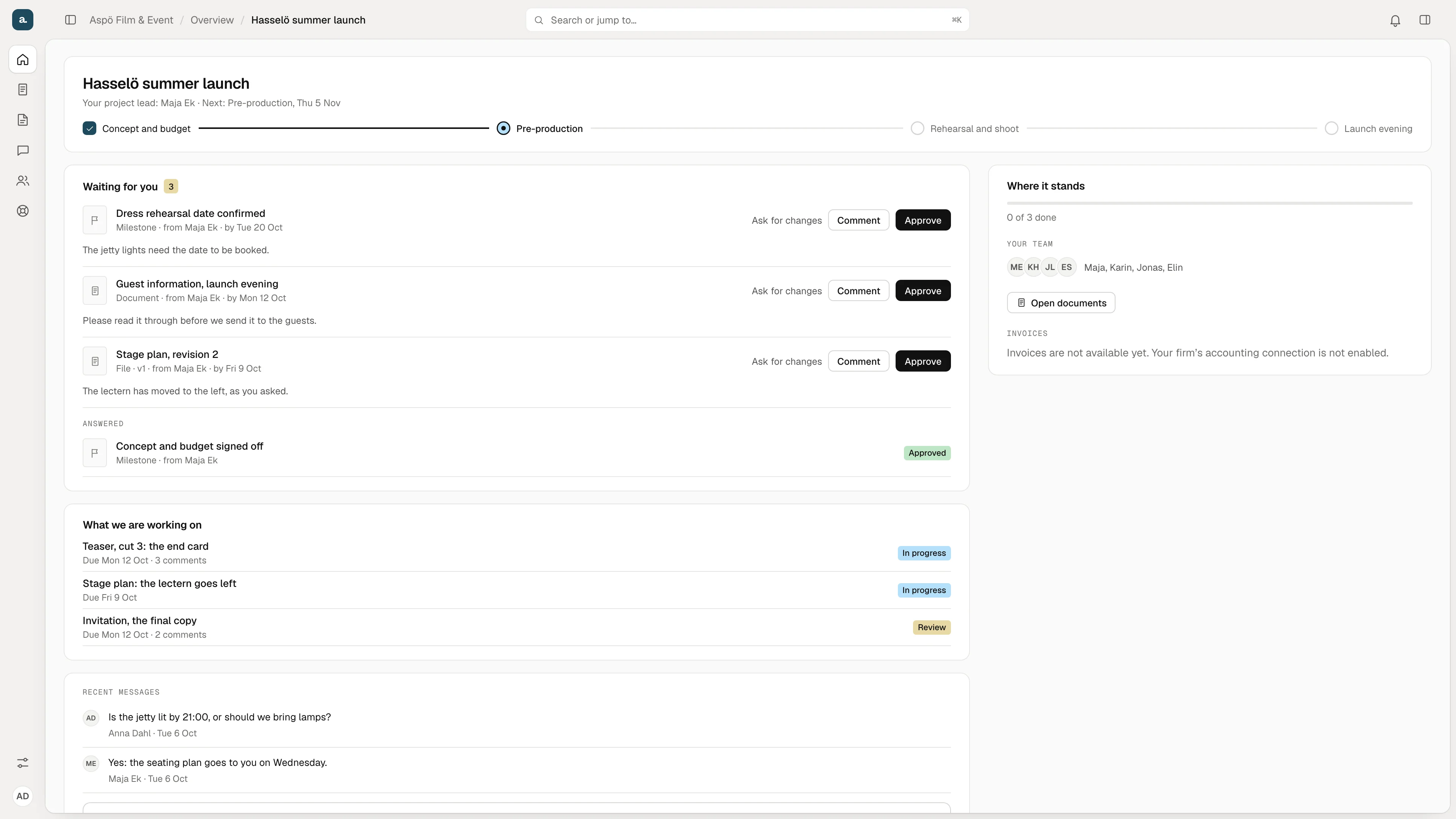
One token file. Everything else is generated.
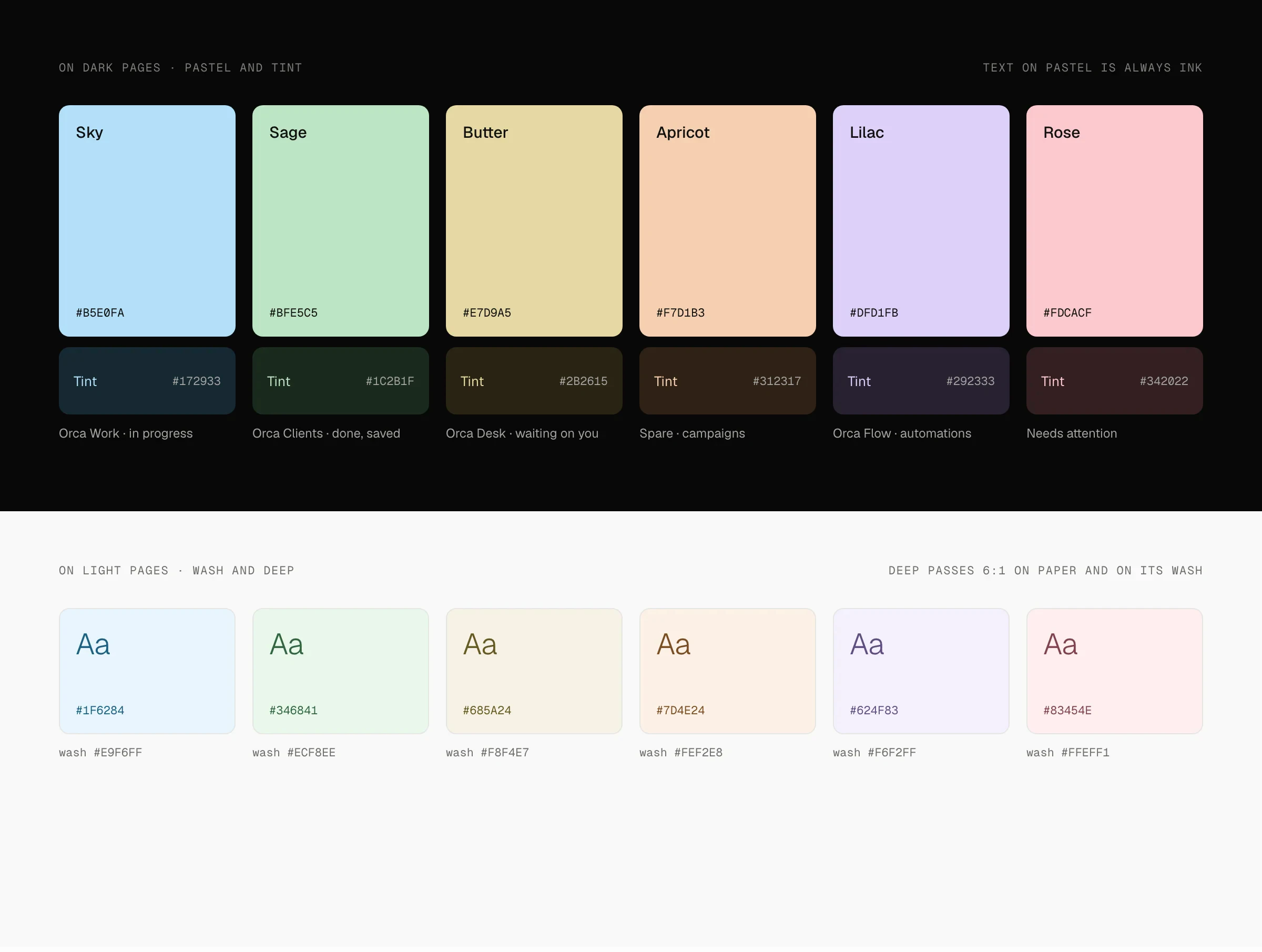
The design system has one source: a tokens file holding colour in two themes, type, spacing, radii, layout and easing. A script generates the CSS variables, the TypeScript constants and the icon paths from it. The generated files are never edited by hand. It emits for the web: CSS, TypeScript and icons. There is no brand accent colour. The system is black and white, with six pastels that are only allowed to carry meaning: a module, a status, a chart series. Light and dark are the same components drawn from different tokens. In dark, depth comes from lightness, never from shadow.
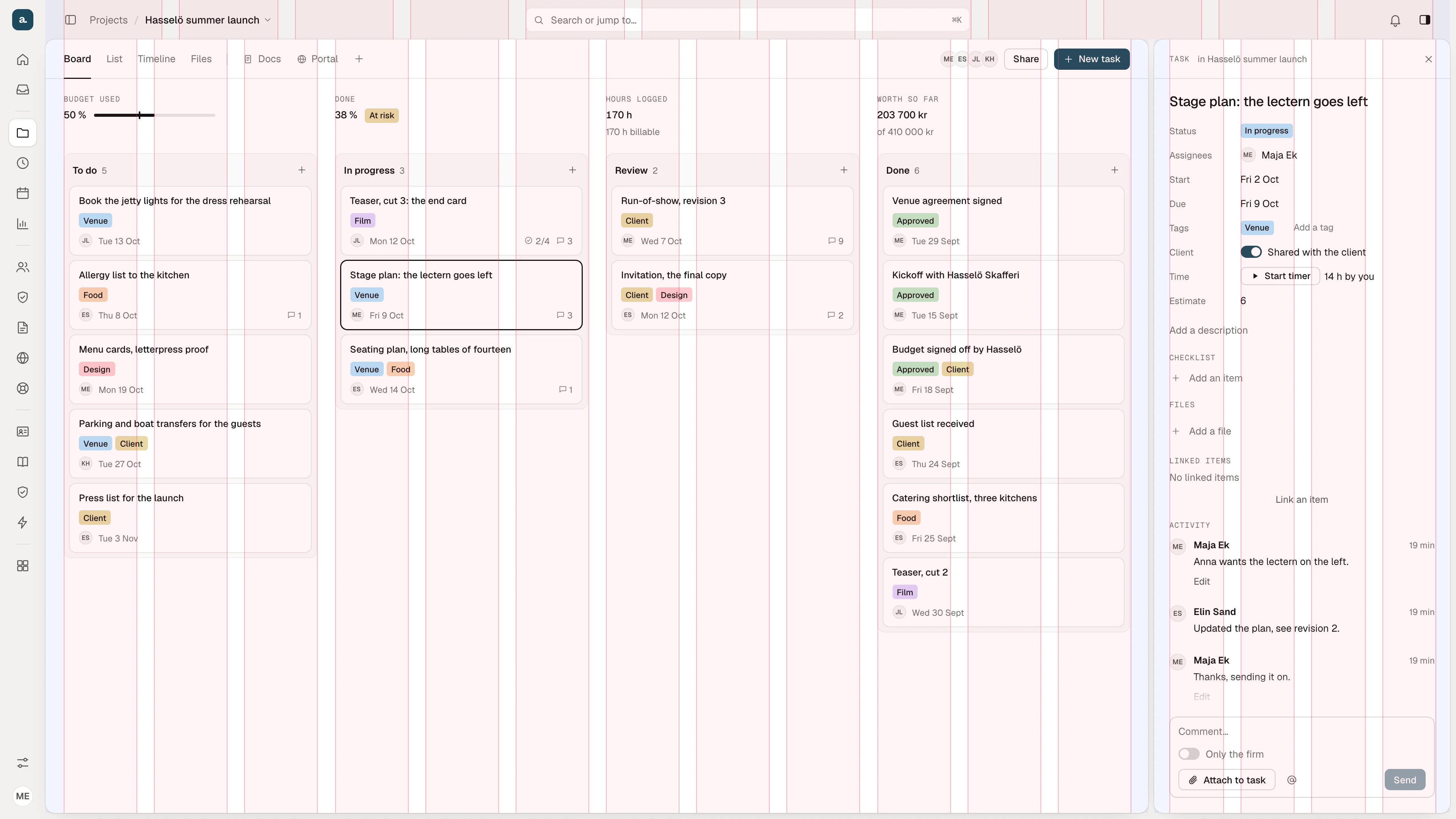
The grid kept slipping, so I made the build fail.
Everything sits on a 12 column grid: 24 pixel gutters, 40 pixel margins on the site, 24 inside a product window, four columns on a phone. I locked it early and it still drifted. The checks measured the outer frame of a screen. The drift was inside it: a table whose last column stopped short of the line, 16 pixels of padding where the grid says 24. So I wrote an audit. It opens every design board in headless Chrome, measures the ink of what the eye sees against the column lines and fails the build when anything is off. The same audit runs on the product’s own screens. A board that leaves the grid can no longer be published.
I plan and check. Agents build inside a gate.
I built Orca the way I built Heywire and Kvitta, at a larger scale. I plan each step and split it into jobs that name their files. Coding agents build the jobs. Nothing ships on an agent’s word: a release has to pass lint, types, tests, a build and a page speed check first. The approved design boards are the specification, so nothing gets redesigned during the build. A state the boards do not show gets drawn first.
Stage: a business idea, built. The public site is live at getorca.tech. The product runs on demo firms with invented data, so the names and figures in these screens are fictional. Judge it on the design and the build.
Creator. I shaped the idea and the positioning, designed the system and directed the build through AI coding agents. Stack: TypeScript, React, Astro for the site and Postgres.
Next
Glenn